Devices that are out in the field — and can still be updated.
Circuit, circuit board and firmware — from a single source.
Bluetooth, BLE, NB-IoT and LTE-M — the device side towards your backend.
Taking over orphaned development — together with the running series.
For design offices, EMS and software houses — the customer stays yours.
EMC pre-compliance testing in an in-house lab — no waiting on third parties.
We develop the electronics inside your device, all from a single
source: circuit, circuit board and firmware — the program that runs on the device.
And we build the update path right in: new firmware reaches your device in the
field remotely, with no service visit. Mains or battery, with a display or without:
both are our everyday work. And you always talk to the person who also does the
engineering.
In-house labIncluding EMC pre-compliance — no waiting on third parties.
References
From feasibility study to series support
Devices in daily clinical use exposed to moisture and cleaning agents, a
controller taken over together with its running series, studies that settle whether
an idea holds before you invest — each card a different starting problem.
Ongoing project
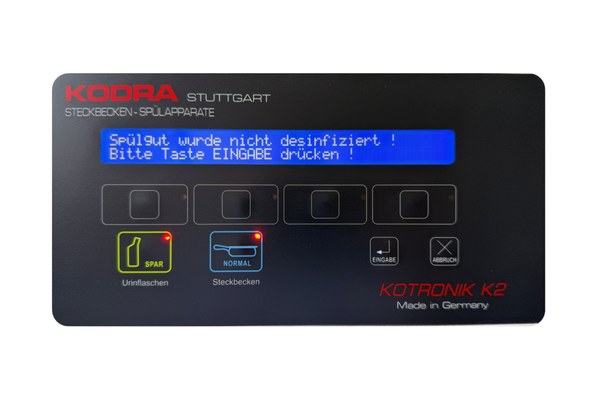
KODRA
The controller of a running device series was left without its engineer. keiltronic took
over the hardware and firmware: understand what someone else had in mind, document the
production state — and only then continue development.
Takeover · Series support
Series product
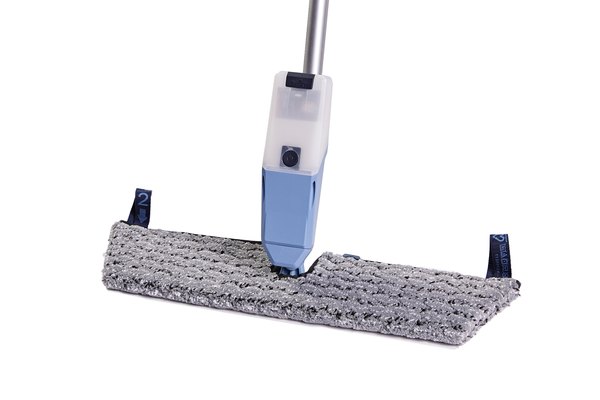
EviSense
A sensor module on the mop holder: it recognises location, motion and orientation
and sends its data over cellular — updates reached the field over the same
connection. The goal: documented cleanliness in hospitals and care facilities.
Vileda Professional · Freudenberg
In-house development
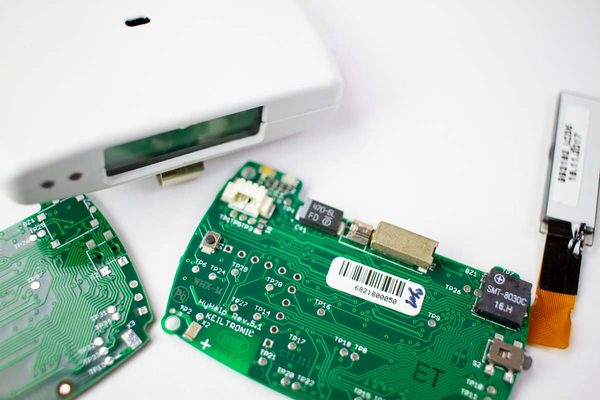
Wearable for clinical hygiene
A wearable device that recognises hand disinfection and guides the wearer through
the prescribed thirty seconds — from the first idea to deployment on hospital
wards. Data and updates travel through the base station built for it.
Clinical use · Wearable · BLE
Standalone product
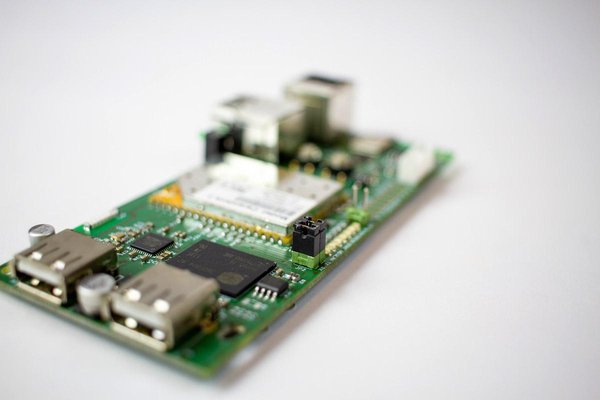
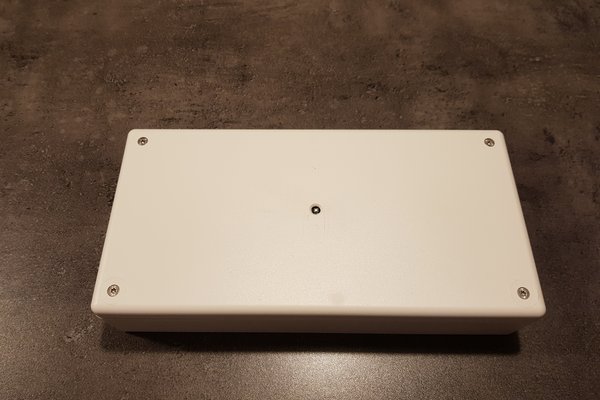
Base station for wearables
When wearable devices cannot reach the network themselves, the counterpart takes
over: Ethernet to the network, Bluetooth to the devices. It collects the fleet's
readings and distributes new firmware — developed from circuit to firmware,
operated in clinical use.
Ethernet · BLE · Firmware updates
System component
BLE beacon
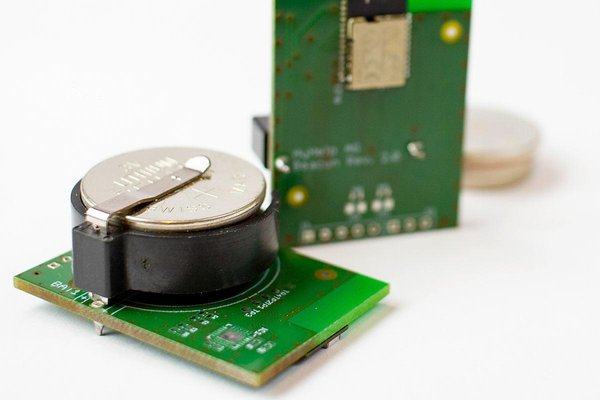
A coin-cell Bluetooth transmitter for rooms and corridors: its radio ID tells the
wearable devices where they currently are — and they switch their measurement
parameters by location. Circuit, layout and firmware from a single source.
BLE · Coin cell · Minimal footprint
Research project
Stepper motor control for astronomy
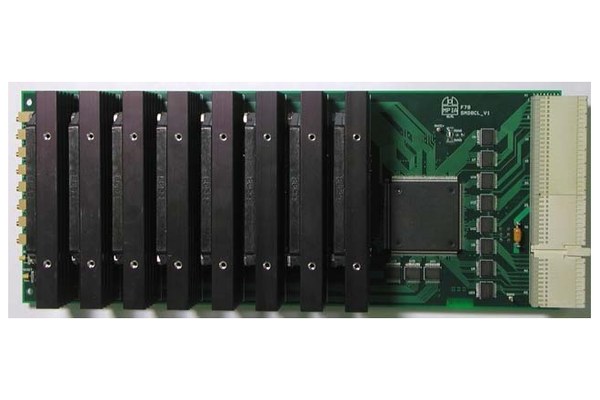
Eight stepper motors in parallel, run in a closed loop: an FPGA card that
translates control signals into step frequencies. Built at the Max Planck
Institute for Astronomy, where controllers like this move the precision
mechanics of telescope instruments.
Max Planck Institute · FPGA · VHDL
Concept study
Smart storage for small parts
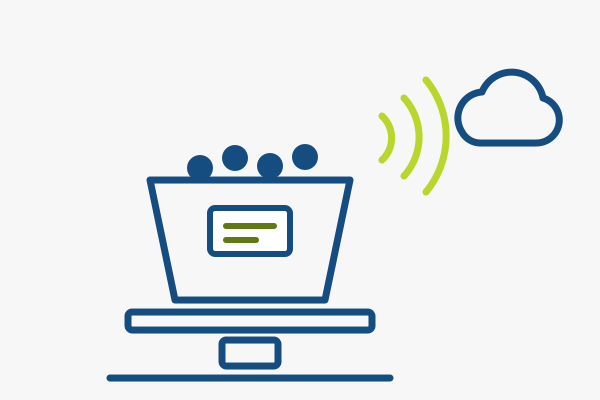
Bins that report their own stock: an in-house concept study for small-parts
logistics — a load cell per box, BLE to a gateway, an e-paper label with NFC,
stock data in the cloud. Worked out from use case to system architecture.
In-house concept · BLE · Weighing
Feasibility study
Alcohol detection in room air
Can an unobtrusive sensor in a room tell whether alcohol is involved? A proof of
concept commissioned by a client, for addiction clinics and correctional facilities: gas
sensing in a neutral enclosure, measurement runs with real-world interference,
the data chain through to the dashboard.
You have a product in mind but no electronics department in house.
These are our core fields — and how a project gets from the first call to series
production is shown step by step on
how a development runs.
Hardware development
Circuit and PCB: the schematic, the EMC-compliant layout,
components chosen for long-term availability — and production documents an
assembly house can work with.
Firmware development
The program inside the device: bare metal or with Zephyr and FreeRTOS, written
in ANSI C following MISRA guidelines — every state under version control,
every change with a reason.
Embedded systems
Hardware and firmware thought through as one: microcontrollers from PIC32
through ARM Cortex-M to nRF9160, interfaces from RS-485 to USB — circuit
and code from the same hand.
Sensing and measurement
From sensor to reliable reading: gas sensing, load cells with 24-bit
converters, motion and orientation detection — evaluated right on the device.
Proven in measurement runs with real-world interference, not just at the desk.
IoT
Devices that deliver their data: Bluetooth and BLE at close range, NB-IoT and
LTE-M over the cellular network — designed around the device's energy
budget. On a battery device, the choice of protocol determines the runtime.
Cloud connectivity
The device side towards your backend: MQTT, HTTP or CoAP, encrypted with TLS,
the payload kept lean — with Protobuf, for instance. We do not operate the
servers themselves — that stays with your IT, and we help coordinate.
App connectivity
Operate and read out via smartphone: an Android app talking directly to the
device — over Bluetooth, BLE or the device's own Wi-Fi hotspot, without user
accounts and without data leaving the building.
Firmware updates over the air
The update path from the headline: remote updates — implemented twice, over
cellular and via a dedicated base station. The device verifies the update's
authenticity before installing — control of the keys stays with the customer.
Often retrofittable, too.
Series support
After the series release we stay on board: incorporating changes, documenting
the production state, reacting in time to component discontinuations. That is
how a series we took over runs with us today.
Services
Common starting points
Secure in the field
A device is not finished when it ships
Most developments end with the series release. Then the device sits at the
customer's site — and the first fault nobody foresaw becomes a recall.
We develop devices that can be updated remotely: implemented twice, over cellular in
series production and via a dedicated base station in clinical use — both projects
are shown above under the references.
What is coming your way
Reporting obligation from 11 September 2026
Whoever discovers an actively exploited vulnerability in their own product from that
day on must report it — to ENISA and the national CSIRT, as required by the Cyber
Resilience Act. But reporting does not close the gap. For that, your device needs an
update path into the field, and that is what we build: an update path with
traceable versions — verifying the update's authenticity is part of it, while the
keys and their management remain in your infrastructure.
RED since 08/2025 · Reporting from 09/2026 · CRA in full from 12/2027
What applies for years
At least five years of support
Under the Cyber Resilience Act, shipping a product includes a support period:
at least five years, with security updates kept available for ten. That takes
an update path — and someone who maintains the versions over the years. We
build the path right in, and take on the maintenance if you wish.
Support period min. 5 years · security updates available for 10
What that requires
Which version is out in the field?
Schematics, layout and firmware live under complete version control, with the
reason recorded for every change. If a device shows problems years later, we can look
up exactly which state was shipped — and the fix builds on that, not on
guesswork.
Git for schematics, layout and firmware · every state retrievable
Retrofitting works too: If your device is already in series
production and has no update path so far, in many cases one can be retrofitted — depending
on the microcontroller, free memory and interface. What is possible and what is not, we
will tell you after a look at the existing firmware.
Lab and testing
Through to series production — not just the prototype
We do EMC pre-compliance testing ourselves. That way we find problems in the lab
instead of at the expensive test appointment. We have taken two products through TÜV
certification — and we stay with you while the series is running.
All engineering happens right here — in Osterburken, Germany:
circuit, PCB layout and firmware never leave the house during development.
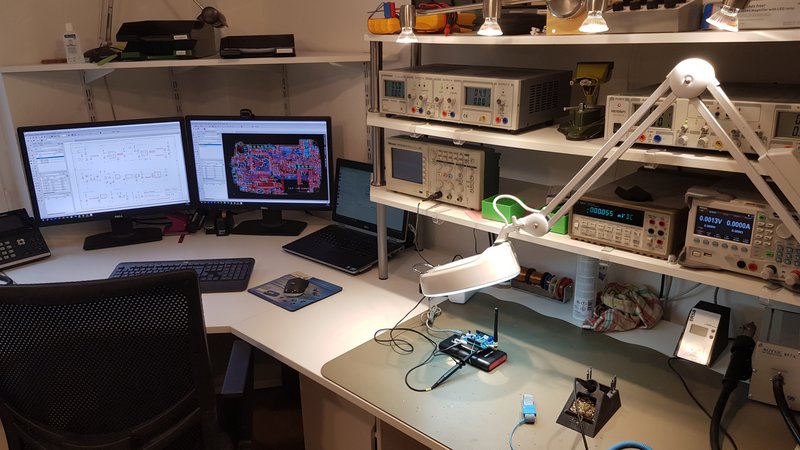
Development and measurement bench: schematic and layout on screen, instruments and soldering station within reach.
Measurement equipment
Oscilloscope, spectrum analyser and lab power supplies by Rohde & Schwarz, multimeters by Fluke, electronic load by Rigol.
EMC pre-compliance
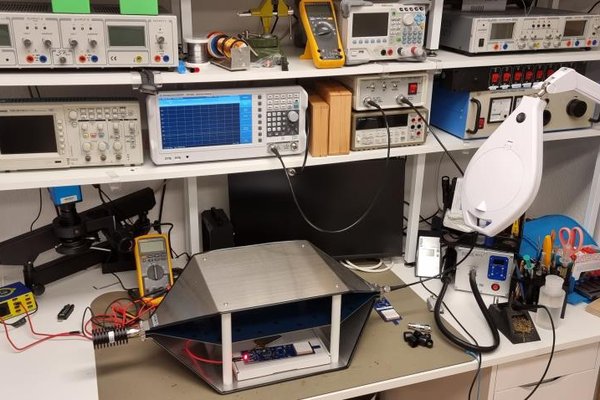
Shielded tent, line impedance stabilisation network and measurement software by Tekbox — emissions are measured before they get expensive.
Energy budget
Battery simulator for devices without a fixed power supply — consumption is measured, not estimated.
Assembly
Hot-air soldering station by ERSA, microscope, component stock. The first prototype is built here, not at a service provider.
Part of CE conformity: Without demonstrated
electromagnetic compatibility, an electronic device may not be placed on the EU
market. As a rule, the EMC Directive does not require an external test lab for
this — the manufacturer declares conformity themselves, backed by their
technical documentation. Pre-compliance testing in our own lab provides the
measurement basis for exactly that: measured against the limits of the
applicable standards, documented in our own test report. And if an accredited
lab is to test after all, the pre-compliance run takes the surprises out of
that appointment.
The measuring environment
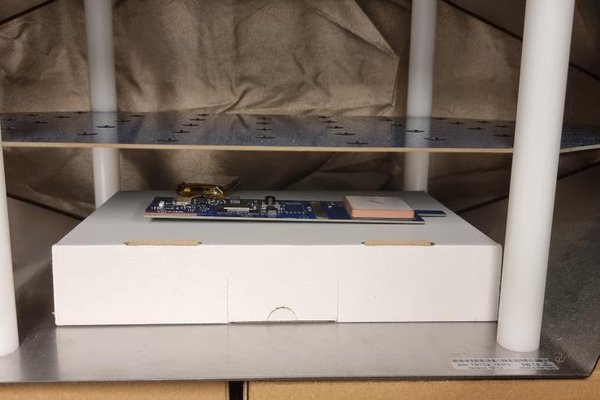
EMC shielding tent
The shielded tent blocks out the ambient radio noise — Wi-Fi, cellular,
broadcast. Only inside does it become visible what really comes from the
device under test: its emissions, measured in the TEM cell across all
device orientations.
Shielding tent · TEM cell
In both directions
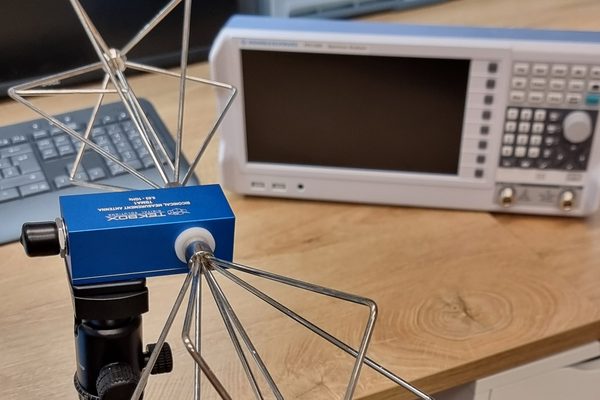
TEM cell and measuring antenna
The TEM cell couples interference out of the device under test — and, when
needed, back in: with a signal generator and RF amplifier we test immunity
while the device is running and its output is monitored live. For
measurements in an open setup, the measuring antenna stands ready.
Emissions · Immunity · conducted and radiated
The evaluation
EMI test receiver
The test receiver records emissions across the frequency range, compared
against the limit lines of the standard — such as EN 55014-1 or EN 55032,
which the radio-equipment standard EN 301 489 refers to. Exceedances are
fixed in the layout while the change costs hours, not a test appointment.
EN 55014-1 · EN 55032 · EN 301 489
Expertise
keiltronic engineering: an engineering firm — not an EMS provider
It all started with stepper motors that had to move very precisely: my diploma thesis
on closed-loop control, written at the Max Planck Institute for Astronomy. Then seven
years of power electronics and drive engineering — golf caddies, spreaders, an
electrically opening bathtub door. Devices that must work when it is cold, wet and
uncomfortable.
In 2012 I built up my own engineering business alongside my job. The first customer
came with an idea for a device that reminds clinical staff of hand disinfection. It
became a device in clinical use — and it mattered enough to me that I gave up my
permanent position for it.
That side business grew into keiltronic engineering — an engineering firm
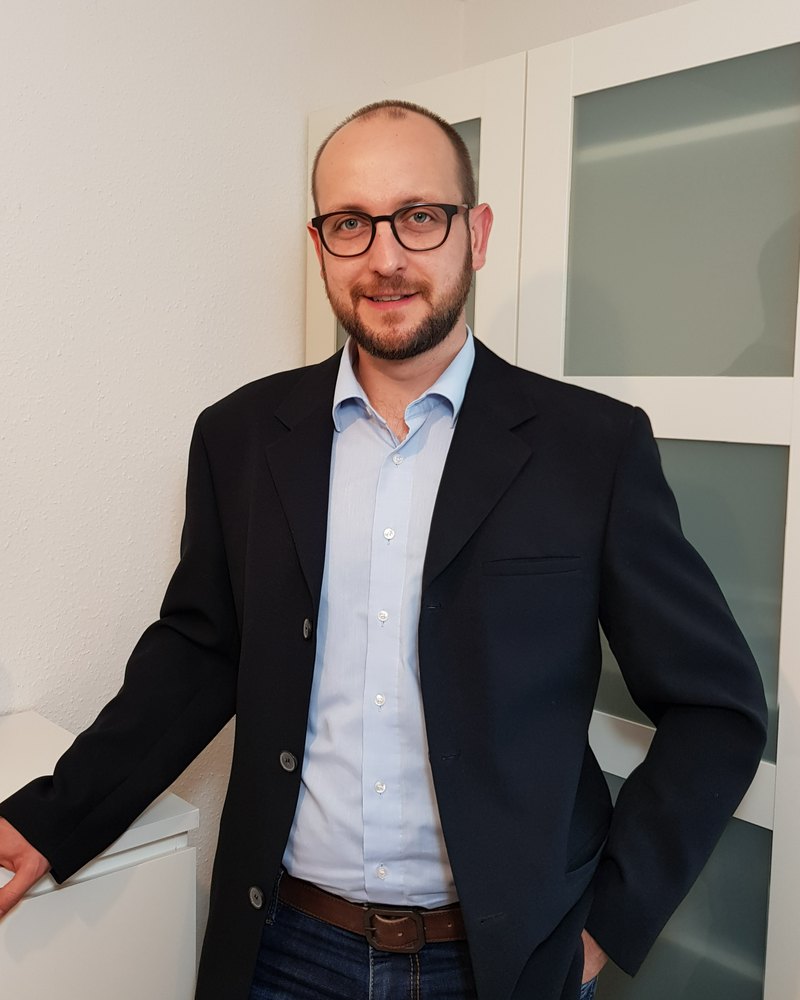
founded by me, run as a GmbH, a German limited company. My name is Thomas
Keilbach; I hold a German Dipl.-Ing. (FH) degree in electrical engineering
with a focus on communications engineering and electronics. To this day the
engineering here is done by me personally. That is exactly the reason for the
short lines of communication.
Every station in detail — from the Max Planck Institute through seven years of
power electronics to the own GmbH — is on the
career page.
Tell us about your project.
The intro call costs you nothing but half an hour. Afterwards you will know whether your
product can be built the way you imagine it. If you prefer, we will sign a
non-disclosure agreement beforehand.
This website uses no cookies, no tracking and no third-party
services — your enquiry travels as a plain e-mail straight to the inbox.
Not quite there yet? The questions prospects ask us beforehand
are answered openly on our FAQ page — from the
what-if-you-are-unavailable risk to who owns the results.